
Every time something unsettling happens in this country, a familiar phrase shows up.
“This isn’t America.”
People say it with real emotion. With confusion. Sometimes with grief. It sounds like disbelief, like something precious has been taken from them. And I understand why it feels that way. But the problem is not that America suddenly became unrecognizable. The problem is that many Americans were never taught what this country actually is.
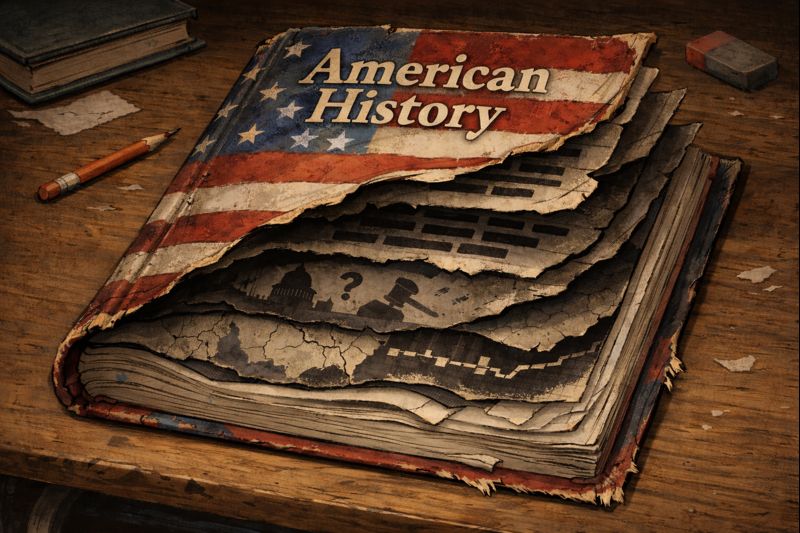
What we are seeing right now does not come out of nowhere. It does not represent a sudden break from our values. It feels shocking only if you were raised on a version of American history that was carefully edited for comfort instead of truth.
Most of us were taught a story where America is fundamentally good, occasionally flawed, and always correcting itself. We learned about progress as a straight line. We learned about mistakes as temporary detours. We learned that the worst parts of our history were unfortunate exceptions rather than foundational choices. That framing matters. It shapes how people interpret the present.
When history is taught as a series of resolved chapters, people grow up believing injustice is something that happened back then, not something that unfolds in real time. Violence becomes acceptable once it has a textbook heading and a clean ending. Accountability feels unnecessary because the story insists it already happened.
That is why people are more comfortable reading about atrocities than recognizing them while they are happening. History feels safe when it’s distant. It feels threatening when it asks something of us now.
There is also a difference between patriotism and propaganda that we are rarely encouraged to examine. Loving a country is not the same as believing everything it says about itself. But from an early age, many Americans are taught that questioning the national story is a form of betrayal. Loyalty is prioritized over literacy. Pride is valued more than understanding consequences.
This creates a fragile identity. One that cannot tolerate contradiction. When reality collides with the myth, the instinct is not curiosity. It is denial. Anger. Nostalgia. Blame. Anything to avoid sitting with the possibility that the story itself was incomplete by design.
That is why “this isn’t who we are” keeps getting repeated during every crisis. It is easier to believe the country has lost its way than to admit it has been consistent. Patterns are unsettling when you have been taught to see everything as isolated incidents.
What complicates this even more is that the rest of the world does not share America’s selective memory. International tension does not come from nowhere. It is rooted in decisions, rhetoric, and actions that Americans are often shielded from learning about honestly. While Americans are taught intention and ideals, others remember outcomes and consequences. That gap in memory creates confusion at home and resentment abroad.
None of this means people are foolish for believing the myth. Many needed it to feel safe. Many inherited it without choice. But there comes a point where clinging to the story does more harm than letting it break.
Because when the story breaks, what people are really grieving is not the country. They are grieving the version of it they were promised. And that grief is real. But it cannot be resolved by insisting the present is an anomaly.
You cannot recognize patterns you were trained not to see. You cannot understand today if you were never given the full context of yesterday. And you cannot move forward while insisting the problem is new.
This is not about hating America. It is about knowing it. And those are not the same thing.
If we want clarity instead of confusion, we have to be willing to unlearn the myth before we can understand the moment we are living in now.
Leave a Reply